Our Servers Catch Burglars Every Day - TREEWALL Field Test Report
What happens when you put a server on the internet? The short answer: within minutes, a stranger tries the door handle. Day and night, on Sundays, on holidays. We are field-testing TREEWALL, our AI security gateway, across roughly 60 servers in our own server room. This post is a field diary of the intrusion attempts we catch every single day — written so you can follow it without any security background. Every number here is a real measurement.
245
IPs banned per day (gateway avg)
128
most knocks in 30 minutes
4,500+
IPs banned across the fleet (cumulative)
0
doors open without approval
Every Night, Someone Knocks
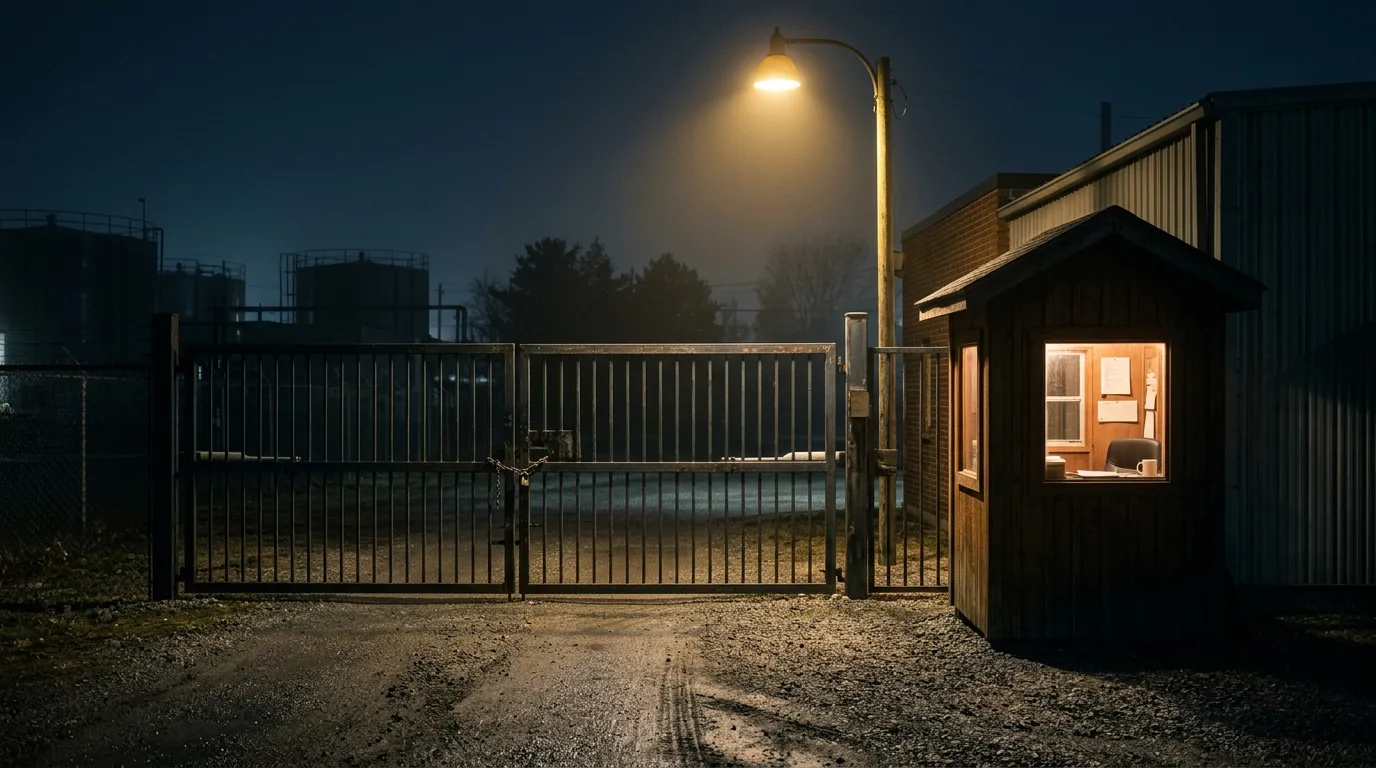
People often say, “we're too small to be a hacker's target.” Half right, half wrong. You're probably not a target — but most intrusion attempts today aren't people choosing you. They are automated programs sweeping the entire internet, trying every door once. Like a burglar walking down the street, testing every handle. Locked? Move on. Open? Walk in.
At our server room gateway, the last week averaged 300–600 security events a day, with an average of 245 IPs automatically banned daily. This was not an unusual week. This is just a weekday on the internet.
ℹ️ Good to know
An IP is the address each computer uses on the internet. “Banning an IP” means turning away every connection from that address at the front door.
Three Things Burglars Want
When you pile up the ban records, the attempts are surprisingly predictable. They want three things.
① The key ring: config files
The most requested path is a config file like /.env. When a developer accidentally exposes it, this file holds the whole key ring: database passwords, API keys. Our front door gets requests for .env and .env.production almost every day. All turned away, of course.
② The back door: admin pages
They hammer hundreds of variations of /admin and /wp-admin. On one single day, admin-page probing alone triggered 373 bans. One open admin page is a master key to the whole building.
③ Password roulette: login doors
The classic: mechanically feeding thousands of common username/password combos into a login form. Humans get tired; programs don't. Which is why the defense has to be a program, not a person.
⚠️ Keep in mind
What these three share: whether you are famous is irrelevant. Automated scans reach every server with an address — including one you set up yesterday.
Burglars We Actually Caught
Two real cases picked from the records.
The impatient one: 128 knocks in 30 minutes
One early morning, a single IP knocked on our admin paths 128 times in 30 minutes — once every 14 seconds. A human guard would have called it in immediately, but there are no humans in a server room at 3 a.m. Instead, the watcher program was counting the pattern, and the moment it crossed the threshold, the IP went straight onto the ban list. The humans simply read about it in the next morning's report.
The regular: 13 visits in a month
The more interesting kind is the regular. One IP showed up on 13 different days over the last 30, totaling 57 appearances. Banned, rests a few days, comes back, banned again. Because TREEWALL keeps per-actor history, it distinguishes a “first-time drifter” from a “regular who has been loitering for a month” — and regulars stay on the watchlist longer, under stricter rules.
💡 Key point
A ban is not the end — it is the beginning of a record. Only when “who, how often, after what” accumulates do future decisions get faster. And in these records, the other side's IP is never stored raw, only as a hash (an encrypted fingerprint). The catcher has to follow the rules too.
How TREEWALL Catches Them
TREEWALL in one sentence: “a gatekeeper that never sleeps + a meticulous record-keeper + a secretary that briefs you every morning.”
Gatekeeper: auto-ban
When a suspicious pattern (repeated failures, probing forbidden areas) crosses a threshold, the IP is banned instantly. Even at 3 a.m., in a tenth of a second.
Record-keeper: daily security diary
Each day's events are condensed into a one-page diary: who came, how often, what they wanted, and whether it rose or fell from yesterday.
Secretary: AI security report
An AI reads the diary and separates “routine noise” from “worth a closer look.” Actions like banning or unbanning are never taken by the AI alone — a human approves.
And one more thing: a daily “door count.” Every day we measure which doors (public service ports) are actually open to the internet and compare them against the approved list. Currently: 18 approved doors, zero doors open without approval. Most security incidents start not with brilliant hacking but with a door someone forgot they left open — which makes this boring check the most important one.
A Week in Numbers
Measured at our server room gateway over the last 7 days (Jul 29 – Aug 4, 2026).
| Metric | Value |
|---|---|
| IPs auto-banned in 7 days | 1,715 |
| Most bans in one day (Aug 3, 2026) | 375 |
| Suspicious requests filtered by the WAF (7 days) | 630 |
| IPs currently on the fleet-wide ban list | ~3,400 |
| Of those, permanently banned for SSH probing (one exposed server) | 3,118 |
| Cumulative IPs banned across the fleet | ~4,500 |
| Successful intrusions requiring human response | 0 |
And the gateway is not the only busy one. A single outlying server that must keep its SSH (remote access) door open to the internet has accumulated a permanent ban list of 3,118 IPs on its own — over three thousand password-guessing burglars caught at just that one door.
Some days spike — like August 3rd, 2026. When a new scanning campaign starts somewhere, the whole internet gets noisy for a few days. What matters is that the response stays identical: block automatically, record everything, and let a human review the morning report.
What Real-World Operation Tells Us
Three conclusions we keep confirming while running TREEWALL in production across ~60 servers.
- Intrusion attempts are not an “if” — they are a “daily.”
Regardless of size, every internet-facing server gets knocked on every day. The question is whether anyone is watching.
- Defense should rest on a system's diligence, not a person's.
No one can eyeball hundreds of events a day. Auto-ban blocks, records accumulate, and humans judge from a summary — the only structure that stays sustainable.
- The most valuable report says “nothing happened today.”
But that one line needs evidence. Only a “nothing happened” built on records (how many were blocked, how many doors were open, all of them approved) can be trusted.
The TREEWALL field test continues. The burglars will come again tomorrow, the gatekeeper will catch them again tomorrow, and we will keep sharing the records here from time to time. Curious what TREEWALL is? See the product page and the introduction post, or reach us via the support page.
Related Posts
© 2026 TreeRU. All rights reserved.
All content is copyrighted by TreeRU. Unauthorized reproduction without attribution is prohibited.